


22 October 2026, Barrackpore
ICAR–Central Inland Fisheries Research Institute, Barrackpore, observed the inaugural day of Khet Bachao Abhiyan – Rabi 2026 at Sheuli village in Barrackpore-II Block, North 24 Parganas, West Bengal, today. The programme was organised in alignment with the nationwide campaign initiated by the Ministry of Agriculture and Farmers Welfare, Government of India, to promote sustainable farming, improve soil health and encourage the balanced and judicious use of fertilizers and other agricultural inputs.
The initiative aimed to enhance awareness of scientific crop and nutrient management, efficient resource utilisation and environmentally responsible agricultural practices suited to local farming conditions.
Barrackpore-II Block has extensive winter vegetable cultivation, including cauliflower, cabbage, onion, tomato and beans. Mustard is an important Rabi oilseed crop, often grown using residual soil moisture, while Boro paddy is cultivated in low-lying and irrigated areas using surface and groundwater resources. The campaign emphasised the need for locally appropriate, resource-efficient farming practices to sustain productivity while conserving natural resources.
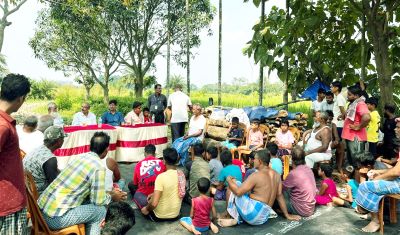
Dr Pradip Dey, Director, ICAR-CIFRI, interacted with farmers and emphasised soil-test-based fertilizer application, balanced nutrient management and crop diversification as key measures for maintaining soil fertility and improving crop productivity. He urged farmers to avoid the indiscriminate use of fertilizers and agrochemicals, highlighting their potential adverse effects on the environment and aquatic ecosystems.
Highlighting the One Health approach, Dr Dey emphasised the interconnectedness of soil, plant, animal, aquatic and human health. He stated, “Saving our fields also means saving the waterbodies, wetlands and rivers connected to them. Healthy soil supports healthy crops, while clean water sustains fish production, biodiversity and rural livelihoods. Khet Bachao Abhiyan should therefore be an effort to protect the entire agricultural and aquatic ecosystem.”
He further explained that excessive use of fertilizers and agrochemicals can lead to nutrient runoff and contamination of ponds, wetlands, rivers and other inland waterbodies, affecting water quality, fish production, aquatic biodiversity and, ultimately, human well-being. He underscored the importance of adopting an integrated approach that safeguards agricultural productivity, environmental quality and public health. As an institute dedicated to inland fisheries research and development, ICAR-CIFRI reaffirmed the significance of linking sustainable agriculture with the conservation of aquatic ecosystems.
The importance of environmentally responsible farming in conserving soil and water resources was highlighted. The need to strengthen farmers’ awareness of sustainable nutrient management and the long-term benefits of improved agricultural practices was also emphasized.
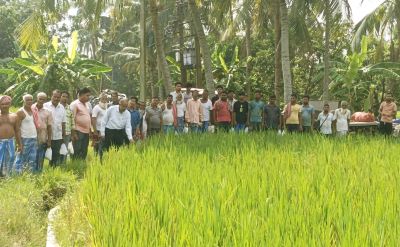
The campaign promotes a range of sustainable farming interventions, including soil-test-based fertilizer application, crop diversification, efficient utilisation of rice fallows, crop residue management, integrated pest management and climate-resilient agriculture.
Other priority areas include the cultivation of Rabi oilseeds and pulses, natural farming, the use of organic and bio-based inputs, efficient water management, rainwater harvesting and groundwater recharge. Capacity building, farm mechanisation and field demonstrations of improved and regenerative agricultural technologies are also expected to facilitate wider adoption of sustainable practices.
The programme reaffirmed ICAR-CIFRI’s commitment to promoting sustainable agriculture–fisheries linkages and climate-resilient rural livelihoods through the conservation of soil and water resources. By encouraging responsible agricultural input use and adopting the One Health approach, the initiative seeks to protect interconnected agricultural and aquatic ecosystems while supporting productive farms, healthy waterbodies and sustainable livelihoods for farming and fishing communities.
A total of 55 farmers from Sheuli and adjoining Teliapara villages participated in the programme.
(Source: ICAR–Central Inland Fisheries Research Institute, Barrackpore)





फेसबुक पर लाइक करें
यूट्यूब पर सदस्यता लें
X पर फॉलो करना X
इंस्टाग्राम पर लाइक करें