


22 June 2026, Motihari, Bihar
As part of the nationwide Khet Bachao Abhiyan–2026, ICAR–Mahatma Gandhi Integrated Farming Research Institute, Motihari, in collaboration with Krishi Vigyan Kendra (KVK), Piprakothi, organized a training-cum-awareness programme for participants of the Certification Course on Integrated Nutrient Management for Fertilizer Dealers. The programme aimed to strengthen the capacity of fertilizer dealers and agri-input stakeholders on soil health restoration, balanced fertilizer use, green manuring, crop diversification, and Integrated Farming Systems (IFS) for sustainable agricultural development.
The programme commenced with an introduction by the KVK scientists, followed by a detailed discussion on the objectives of the Khet Bachao Abhiyan. The speakers emphasized the critical role of fertilizer dealers in promoting balanced nutrient management and reducing excessive dependence on chemical fertilizers. It was highlighted that fertilizer dealers serve as important knowledge partners in guiding farmers towards soil-test-based nutrient management and sustainable agricultural practices.
During the technical session, the importance of green manuring through Dhaincha (Sesbania) and the inclusion of green gram and Azolla as biological nitrogen sources in rice-based systems was highlighted. Participants were informed that green manuring not only supplies nutrients but also improves soil organic matter, enhances microbial activity, increases nutrient-use efficiency, and strengthens long-term soil health.
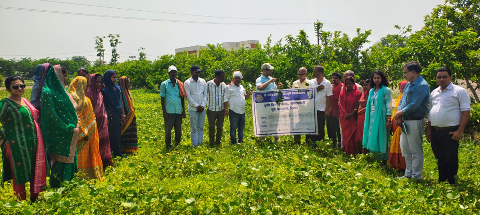
The importance of integrating at least one pulse crop into the annual cropping cycle was also emphasized. Demonstrations on the root nodules of summer mungbean and Dhaincha helped explain their role in biological nitrogen fixation. Farmers and trainees were informed that a well-grown Dhaincha crop can contribute approximately 50–60 kg nitrogen per hectare, equivalent to nearly 110–130 kg urea per hectare (about 2.5–3 bags of urea), thereby reducing fertilizer requirements in succeeding rice crops.
The speakers further stressed the importance of timely sowing, crop planning, and crop calendar-based varietal selection. It was explained that choosing crop varieties according to sowing windows and local climatic conditions is essential for maximizing productivity, improving resource-use efficiency, and minimizing climate-related risks. Participants were encouraged to promote climate-resilient crop varieties and scientific crop planning among farmers.
The role of vermicomposting as an eco-friendly and sustainable source of nutrients for field crops, vegetables, and horticultural crops was also highlighted. Farmers were encouraged to utilize locally available organic resources for preparing quality vermicompost and strengthening soil biological health.
Scientists also discussed practical approaches for reducing chemical fertilizer dependence through crop diversification, green manuring, biofertilizers, crop residue recycling, and conservation agriculture practices. Participants were advised to promote regular soil testing and recommended fertilizer doses to improve nutrient-use efficiency and reduce unnecessary fertilizer expenditure.
Special emphasis was given to the importance of Integrated Farming Systems (IFS) for the waterlogged and flood-prone regions of North Bihar. Scientists explained that integrating crops, livestock, fisheries, horticulture, and other complementary enterprises can improve farm resilience, enhance income opportunities, strengthen resource-use efficiency, and support climate adaptation.
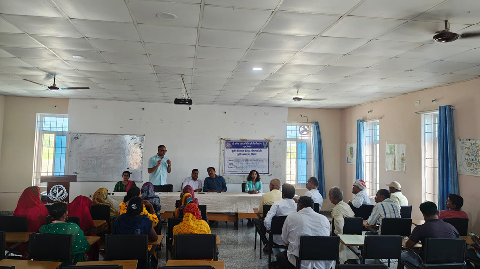
The participants were also sensitized about the harmful effects of crop residue burning and the benefits of crop residue recycling for improving soil organic carbon, nutrient availability, soil moisture conservation, and microbial activity.
The programme received an encouraging response from the trainees, who expressed their willingness to promote balanced fertilizer use, green manuring, soil testing, crop diversification, and integrated farming approaches among farming communities.
The event concluded with a strong message that healthy soils, balanced nutrient management, biological nitrogen fixation, and integrated farming systems are essential for building productive, profitable, and climate-resilient agricultural systems. Scientists and staff of ICAR-MGIFRI and KVK Piprakothi actively contributed to the programme and provided field-oriented recommendations for sustainable agriculture and soil health management.
(Source: ICAR–Mahatma Gandhi Integrated Farming Research Institute, Motihari)





Like on Facebook
Subscribe on Youtube
Follow on X X
Like on instagram